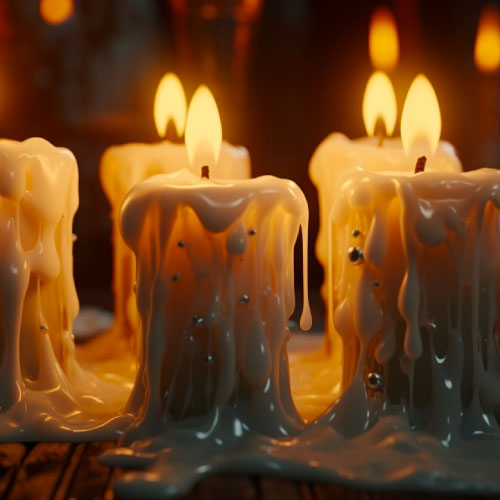
FIRST PUBLISHED IN QUERENCIA PRESS SUMMER 2023
Nobody had expected Sonia to die. At fifty-seven she was the backbone of the family. But her strength was no match for the massive cerebral hemorrhage that struck during her weekly trip to the market.
Sonia settled into a coma with her usual grace. And because managing details was what she did best, she spent the next six days patiently waiting for the last of her life to unfold. She waited for her sisters to arrive from Massachusetts, waited for her son to arrive from Florida, waited for everyone to arrive and process and grieve. And then, with a final flourish, Sonia waited for the priest in the middle of the night for one last blessing. The next morning, she died.
Sonia was the family conduit through which all interactions flowed. On one side was her husband, John. On the other, their son Gregg. As a young man, John was confident, brash, full of promise. But over time he failed at every business on which he’d set his sights. As his failures mounted, so did his penchant for doling out abuse.
Gregg suffered most from John’s anger. Never good enough, never smart enough. He became the embodiment of his father’s failures. Sonia spent her marriage capital as intermediary, smoothing the edges of John’s verbal abuse. But even with his mother absorbing the blows, Gregg grew up broken. When he came of age he escaped to Florida and, by 32, felt pride for the first time in his life working as a cook in a small cafe in Ocala.
At the funeral tension threatened to overrule the family’s grief. Sonia’s sisters never liked John. He was loud. A bully. His hair-trigger temper could cut the strongest person down to a stub. And while Sonia could calm the storm with a simple glance or gentle touch, everyone else was struck mute by the unleashing of it.
Their sad assemblage managed to get through the haze of her church service and cemetery burial without incident. They finished the day at John and Sonia’s ranch house in a quiet Camden cul-de-sac. Sonia’s sisters, Margaret and Connie, were there along with their husbands, Bill and Mike, as was Gregg. As evening fell, they sat on the patio around a redwood table with a bare lightbulb casting harsh shadows and a citronella candle flickering in the center.
They shook their heads.
They wiped their tears.
They quietly laughed.
The light from the candle’s flame softened John’s natural irritability, leaving behind the melancholy of a man, lost and alone. Gregg busied himself, moving in and out of the house, helping in the only way he knew how—quietly serving food and freshening drinks. John watched each pass and, as he did, tracts of his sorrow gradually faded, replaced by a growing bitterness.
It started simply. A word here. A barb there. Bit by bit, John fashioning his grief into a spear of escalating vitriol aimed at his son. When these small cuts didn’t alleviate the anger over his loss, John ratcheted up the assault.
“Look at the big man playing chef,” he said.
Gregg lowered his eyes and refilled the soda glasses. Sonia’s sisters and their husbands fell silent. Sonia had always handled moments like these with an easy word or diversion, but Sonia wasn’t there.
“What do you call this dip?” said John with a laugh. “It tastes like garbage.”
Gregg bowed his head. His aunts and uncles quietly coughed, rearranged plates, brushed crumbs from the table—searched for someplace, anyplace else to look.
When Gregg went back into the kitchen John said, “Can you believe this kid? What restaurant would hire a loser who can’t cook his way out of a paper bag? He’s a joke.”
Surrounded now by darkness, the overhead light cast its theatrical spot on a five-person ensemble held hostage by a barrage of insults hurled at a guiltless target. Sonia’s sisters tried to turn the conversation back to Sonia, but their tightening voices and apprehensive eyes betrayed their intent. They were calling on Sonia to protect her son.
Gregg brought out a bowl of fruit and clean plates.
“Jesus Christ,” said John. “You’re bringing fruit? Now? We don’t need this shit. Get it out of here.”
Gregg’s face tightened and his shoulders caved in like a beaten dog’s as he took the fruit back into the kitchen. There was no protest from Sonia’s sisters as they sat quietly with their eyes cast down, twisting their napkins into knots of discomfort. When Gregg came back, John stood with hands on hips and stared at his son. “You’re a goddam joke, bowing and scraping, like a servant scrounging for a bone. When I look at you I see the biggest disappointment of my life.”
Gregg flinched. John looked him up and down, and then, for a brief moment he allowed the fear of a life without Sonia—his wife, his love—pass over his face. No sooner was it there than it was gone, replaced by the last threads of his anger. With a curl of his lip he snarled, “Get the hell out of my way.” John brushed past his son and walked into the house.
When he was gone, Gregg crumpled into his seat as his aunts and uncles sat in the circle of light, staring uncomfortably into the flame of the citronella candle. The night beyond their island was impenetrable. Then, Aunt Margaret reached across the table for Gregg’s hand.
“Don’t listen to him, sweetheart. He’s always been an angry man.”
Gregg sat, motionless, with his head bowed.
“You’re a damn sight more successful than he ever was,” offered Uncle Mike.
Uncle Bill nodded. “That’s true. John’s failed at everything he’s ever tried.”
“God,” said Uncle Mike. “Remember that cleaning business he started? It took less than three months to close down.”
They all laughed a little, but Gregg sat with his eyes lowered and his face in shadows.
“What about the grocery store?” said Aunt Margaret. “I always wondered if he’d set that fire himself.”
“John would definitely have done something like that,” agreed Uncle Bill.
“That’s what makes you the better man, Gregg,” said Aunt Connie. “You’re not a loser. You’re a fighter. You’ve built a great life for yourself. You’ve—”
“SHUT UP!” screamed Gregg. He raised his fist and pounded the table with such force, the citronella candle flew into the air, dumping hot wax over his face. “You worthless pieces of shit! You’re not fit to lick my father’s boots!”
His aunts and uncles stared, as the wax traveled down Gregg’s forehead and cheeks and chin, cooling in mid-flow. His face—distorted and obscured by wax—turned into a deformed inhuman thing of hurt and anger.
Gregg jumped up from his seat and glared at them with his hands balled into fists and his face encrusted in a translucent yellow shell. They all flinched backwards as his six-foot frame loomed and his eyes pierced through the wax manifestation of his shame and grief and self-hatred.
“I’ll bury every fucking one of you!” he yelled. “You! And you! And you! And YOU!” stabbing a finger in each of their faces. “And after I do, I will dance on your graves!”
Gregg turned and walked into the black night, leaving them in the harsh glow of the single bare lightbulb.
END